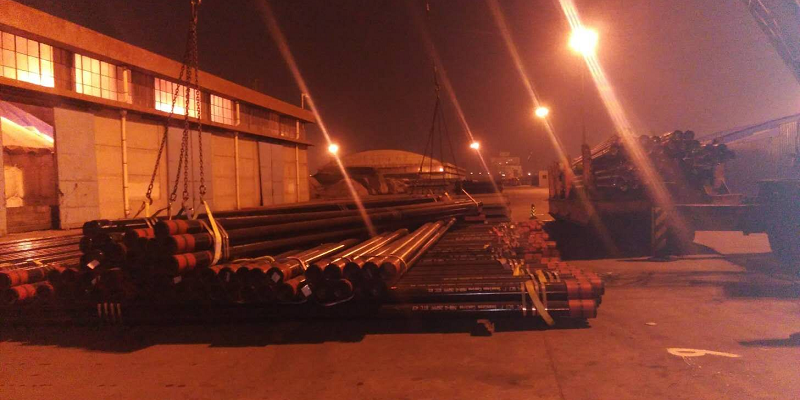
Choosing steel for an import order starts with the application, not simply the product name. A structural fabricator, a pipe distributor and a sheet-metal processor may buy similar-looking materials but need different grades, tolerances and delivery conditions.
Our main products include seamless and galvanized welded pipes, square and rectangular hollow sections, steel plates, coated and uncoated coils and sheets, structural sections, stainless steel products, and aluminum coils and sheets. This range covers material needs across construction, fabrication, industrial equipment and distribution.
The following guide explains where these products fit, which specifications matter, and how to prepare an inquiry that makes quotations easier to compare.
Steel Pipes for Construction, Fabrication and Industrial Service
Pipe selection requires more than an outside diameter and wall thickness. Service conditions, joining methods and the applicable product specification influence whether seamless or welded construction is appropriate. The grade and inspection requirements must also suit the intended duty.
Seamless Steel Pipes
Seamless steel pipes are manufactured without a welded longitudinal seam. Depending on their grade and specification, they are used in industrial piping, mechanical components and equipment fabrication. For a pressure-service inquiry, operating temperature, pressure and the governing design requirements are important starting points.
A seamless pipe is not automatically suitable for every pressure or corrosive environment. Buyers should specify the material grade, manufacturing standard, delivery condition and any required testing rather than relying on the word “seamless” as a quality designation.
For mechanical applications, dimensional accuracy, machinability and the required finished size may matter as much as the nominal pipe designation. Clarifying these priorities helps avoid buying excess material or selecting a product that requires unnecessary processing.
Galvanized Welded Steel Pipes
Galvanized welded steel pipes combine welded construction with a zinc coating. They are used in applications such as fencing, greenhouse frames and general fabrication where the selected specification and coating suit the exposure conditions.
The galvanizing route should be stated in the inquiry. Pipe made from pre-galvanized strip and pipe galvanized after fabrication can differ in coating coverage, particularly around welds and cut edges. End preparation, thread requirements and the treatment of exposed areas also deserve attention.
Where an inquiry calls for electric resistance welding, that requirement should be stated explicitly. “Welded pipe” alone does not define every detail of the manufacturing process.
Square and Rectangular Hollow Sections for Fabricated Structures
Square and rectangular hollow sections provide closed profiles for frames, supports and fabricated assemblies. Their shape offers practical connection surfaces, but suitability still depends on the specified grade, dimensions, wall thickness and structural design.
Square and Rectangular Steel Tubes
Square tubes are commonly selected for frames with matching dimensions in both directions. Rectangular tubes provide different section depths, which can be useful when a design has a preferred orientation or a limited installation space. Neither shape should be selected on appearance alone when structural performance matters.
For an accurate quotation, specify the outside dimensions, wall thickness, length and tolerance requirements. Corner geometry, straightness and the internal weld bead may also affect fabrication, especially where parts must slide inside one another or accept close-fitting inserts.
Galvanized Square Tubes and Galvanized Rectangular Tubes
Our hollow-section range includes galvanized square tubes and galvanized rectangular tubes. These are relevant to outdoor frames, barriers, agricultural structures and similar applications where corrosion protection is part of the specification.
When comparing offers, establish whether galvanizing takes place before or after tube manufacture. Coating requirements, weld-area treatment and any subsequent cutting or drilling should be considered together. A lower material price may not represent a lower finished cost if additional corrosion-protection work is needed after fabrication.
Stainless Steel Square and Rectangular Tubes
Stainless steel square and rectangular tubes are used in architectural metalwork, equipment frames and fabricated components where appearance, cleaning requirements or corrosion resistance influence material selection.
Buyers should identify whether the application is decorative, structural or process-related. Surface finish, weld condition and dimensional tolerances can differ between product specifications. Stainless steel does not remove the need to check the grade against the actual operating environment.
Steel Plates, Coils and Sheets for Processing and Manufacturing
Flat products serve different stages of manufacturing. Coil suits continuous processing, while cut sheets and plates may be more practical for fabrication shops or project orders. The right purchasing format depends on processing equipment, handling capacity and the required finished dimensions.
Steel Plates and Hot-Rolled Coils and Sheets
Steel plates are used in fabricated structures, machinery parts, base plates and other applications requiring flat material of a specified thickness and grade. Where a plate will form part of pressure equipment, the relevant material and design requirements must be established separately; general structural plate is not an automatic substitute.
Hot-rolled steel coils and sheets are also used for forming, welding and general fabrication. Their surface condition should be discussed before ordering, particularly when the material will be painted, laser-cut or used in an appearance-sensitive assembly.
For cut-to-length requirements, finished dimensions and tolerances should be part of the quotation rather than left for confirmation after production.
Cold-Rolled Steel Coils and Sheets
Cold-rolled steel coils and sheets are often considered when surface quality and dimensional control are important. Applications include enclosures, formed components, cabinets and manufactured parts.
The delivery condition matters. Material intended for significant forming needs suitable mechanical properties; a smooth surface alone does not establish formability. Surface protection, oiling requirements and the appearance of exposed faces should be agreed with the downstream process in mind.
Galvanized Steel Coils and Sheets
Galvanized steel coils and sheets provide a zinc-coated substrate for construction products, ductwork, enclosures and formed components. Selecting the base steel grade and the coating specification are separate decisions.
Coating mass, surface treatment and forming requirements influence both processing and service performance. Buyers should also consider how cut edges, fasteners and fabricated joints will be protected in the finished assembly. These details are particularly important where coated material is cut or drilled after delivery.
Pre-Painted Steel Coils and Sheets
Pre-painted steel coils and sheets, also described as prepainted steel, are used for building panels, cladding and other formed products requiring an applied finish. A useful inquiry identifies the substrate as well as the color and coating system.
Color alone is not a complete specification. Topcoat and back-coat requirements, intended exposure, forming demands and any protective film should be included where relevant. If color matching is important, agree on an approved reference and an acceptance method rather than relying only on a screen image.
Aluminum Coils and Sheets
Aluminum coils and sheets extend our flat-product range beyond steel. They are used in applications where weight, formability, appearance or corrosion behavior influence the choice of material.
Specify the aluminum alloy and temper together. These affect processing and mechanical behavior, and cannot be replaced by a thickness description alone. The intended fabrication process, surface finish and contact with other metals should also be considered before substituting aluminum for a steel component.
H-Beams, Steel Angles, Channels and I-Beams
Structural sections are purchased to match a design, not simply a profile name. Our range includes H-beams, angle steel, channel steel and I-beams for use in specified structural and fabrication applications. Dimensions and grade should be checked together when comparing alternatives or assembling a mixed-profile order.
Steel H-Beams and I-Beams
Steel H-beams and I-beams are used in frames, supports and other load-bearing assemblies. Their section dimensions, flange geometry, material grade and dimensional standard must match the engineering requirements.
An H-shaped profile should not be treated as interchangeable with every wide-flange beam, nor should all I-shaped products be assigned the same section series. Buyers should provide the required designation or a drawing with the critical dimensions. For fabrication, length tolerances, straightness and any cutting requirements can be important alongside the section size.
Steel Angles and Channels
Steel angles are used in bracing, brackets, frames and connections. State whether equal-leg or unequal-leg angles are required, then specify the leg dimensions, thickness and length.
Steel channels are used for supports, frames and fabricated assemblies. Hot-rolled channels and cold-formed C-sections can differ in geometry and performance, so one should not be substituted for the other without approval.
For mixed-section orders, keep each profile on a separate specification line. Clear identification reduces the chance of comparing prices for sections that share a familiar name but have different dimensions or intended uses.
Stainless Steel Pipes, Flat Products and Angles
Stainless steel selection requires a practical assessment of the environment. Moisture, cleaning chemicals, temperature and surface condition can all affect performance. Selecting a grade because it is familiar is less reliable than matching it to the actual exposure and fabrication requirements.
Stainless Steel Pipes and Seamless Pipes
Stainless steel pipes serve a range of fabrication and industrial piping needs. Stainless steel seamless pipes are a distinct product option when seamless construction is required by the application or purchasing specification.
The absence of a weld does not, by itself, establish cleanliness, pressure suitability or corrosion resistance. Buyers should specify the grade, dimensions, delivery condition, surface requirements and applicable inspection criteria. If the product is intended for hygienic or other specialized service, those requirements must be stated explicitly rather than inferred from the material name.
Stainless Steel Coils and Sheets
Stainless steel coils and sheets are used for fabricated equipment, panels, enclosures and architectural components. Coil may suit repeat processing, while sheets can simplify smaller fabrication batches.
Surface finish deserves particular attention where appearance is important. Finish designation, grain direction and protective-film requirements should be agreed where applicable. A sample or other approved finish reference can help prevent misunderstandings that are difficult to resolve after the material has been cut and installed.
Stainless Steel Angles
Stainless steel angles are used in frames, supports and fabricated details where the selected stainless grade is appropriate. The operating environment and connection details help define the material and finish requirements, particularly where these sections meet other metals or remain exposed after installation.
The quotation should identify the leg sizes, thickness, length and finish. Manufacturing method and dimensional tolerances may also matter when the angle must fit precisely against another component. Consistent material identification is useful when stainless profiles are purchased alongside carbon steel sections for the same project.
Material Selection and Custom Processing Requirements
The breadth of our product range gives buyers options, but it does not make different materials interchangeable. A galvanized carbon steel tube, a stainless tube and an aluminum section can require different joining methods, corrosion precautions and design checks.
Begin with the environment and the fabrication process. Will the material be welded, bent, machined or painted? Is the application exposed to moisture, chemicals or elevated temperatures? Are surface appearance and cleaning important? These questions help narrow the specification before price comparisons begin.
Custom requirements should be defined as measurable work. Depending on the product and the availability confirmed in the quotation, these may include cut lengths, cut-to-size sheets, coil slitting, pipe end preparation, surface finishing or project-specific packing. A request for “customized material” is less useful than a drawing or a list of finished dimensions and acceptance tolerances.
For coils, processing compatibility also depends on width, inside diameter, outside diameter and permitted coil weight. For fabricated components, identify which dimensions are critical and whether inspection is required before further processing.
Any proposed grade substitution or processing alternative should be reviewed before the order is placed. Commercial convenience is not a sufficient reason to change a material that has already been specified by the designer or end user.
Quality Control: Agree on Evidence Before Shipment
Quality control is most useful when it checks the features that matter to the buyer. An inspection plan should distinguish material identity, dimensions, surface condition and any application-specific requirements rather than treating “good quality” as a complete acceptance criterion.
For pipes and hollow sections, relevant checks may include outside dimensions, wall thickness, length, straightness and end condition. For plates and sheets, thickness, flatness, finished dimensions and surface condition can affect fabrication. Coated products require attention to the agreed coating specification, while stainless products may need closer review of finish and surface cleanliness.
Documentation should be discussed before purchase. Where material test certificates or other inspection records are required, specify the document type, the information needed and the required connection between the records and the delivered material. An unrelated certificate or a generic sample does not establish the identity of a shipment.
Additional testing or third-party inspection should be agreed by scope and acceptance criteria. It should not be assumed to be included merely because an order is for export.
Buyers should also define how discrepancies will be reported and handled before dispatch. Photographs can support a review of packing or visible condition, but they do not replace dimensional measurements or the required material records. Clear evidence requirements make acceptance more objective for both parties.
Export Coordination and a More Useful Request for Quotation
A steel import order is not complete when the product price is agreed. Packing, shipment planning and documentation affect whether material can be received, identified and used efficiently at its destination.
Export-service requirements should be included in the quotation scope. These may cover bundle or package marking, protection for finished surfaces, moisture precautions, container loading arrangements and the documents required for the shipment. Suitability depends on the product, transport route and the buyer’s receiving facilities; one packing method will not suit every pipe, coil and polished sheet.
The commercial terms should identify the agreed delivery basis and named place, together with the responsibilities included in the offer. Production timing, inspection arrangements and shipment scheduling also need separate confirmation. None should be inferred from a general product description.
Preparing Your Inquiry
A useful request for quotation includes:
- Product name, material grade and applicable specification.
- Dimensions, thickness or wall thickness, and required lengths.
- Quantity by item and the basis for weight or piece-count pricing.
- Surface finish, galvanizing or paint-coating requirements.
- Processing instructions, drawings and critical tolerances.
- Inspection requirements and supporting documents.
- Destination, delivery terms and requested schedule.
- Packing, marking and any receiving restrictions.
Our product range gives importers a starting point for discussing pipe, flat-product, structural-section and stainless steel requirements together. If a mixed order is proposed, availability, packing compatibility and shipment consolidation should be confirmed item by item.
The practical purchasing advantage is a quotation that can be evaluated against the same requirements as competing offers. Compare the specification, processing, inspection and delivery scope alongside the price. Send your material list and application details to discuss the appropriate products and a quotation based on clearly agreed requirements.