What Is a Carbon Steel Plate? Definition and Classification
According to definitions established by the American Iron and Steel Institute (AISI) and European standard EN 10020, carbon steel is an iron-carbon alloy containing up to 2.0% carbon by weight, alongside controlled residual amounts of manganese (typically up to 1.65%), silicon (up to 0.60%), and copper (up to 0.60%), with strict upper limits on impurities such as phosphorus and sulfur. Unlike stainless or low-alloy steels, no minimum content is specified for other alloying elements to achieve targeted material properties.
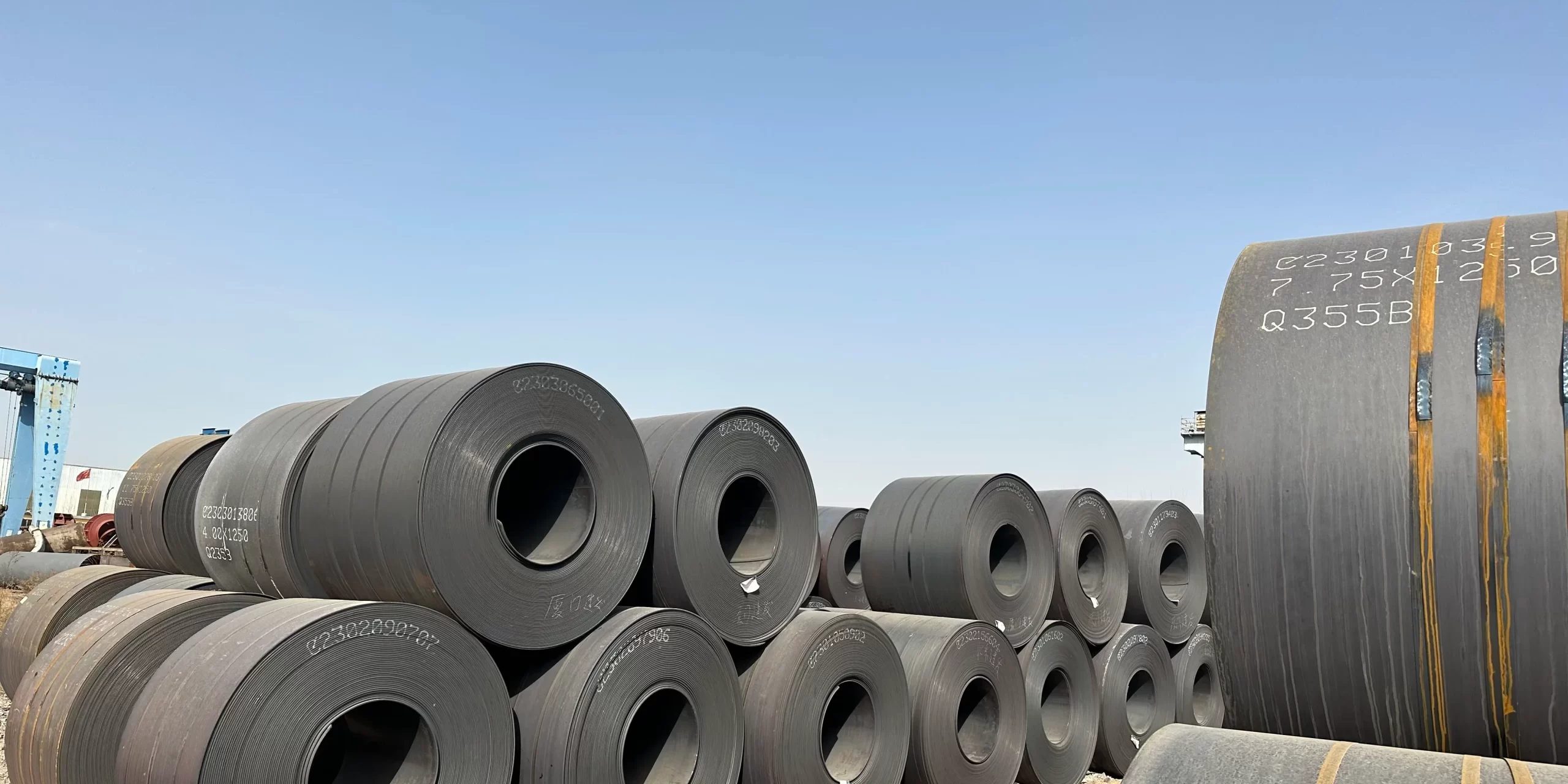
In engineering practice, distinguishing between carbon steel plate and carbon steel sheet is critical for accurate procurement and structural design. Steel sheet generally refers to flat-rolled material under 6 mm in thickness delivered in coils or cut lengths for light enclosures, automotive body panels, and ductwork. Carbon steel plate starts at 6 mm and extends up to 300 mm or more for heavy structural base plates, bridge girders, and industrial pressure hulls.
Low Carbon Steel Plate (Mild Steel Plate)
Low carbon steel plate—commonly referred to in engineering as mild steel plate—contains approximately 0.05% to 0.25% carbon. Because of its low carbon ratio, it resists hardening during welding thermal cycles and exhibits high ductility, impact toughness, and ease of cold bending or punching. Mild steel plates cannot be significantly hardened through direct quenching and tempering, though surface hardness can be increased via carburizing. They account for the largest volume of structural plates used in building frames, storage tanks, and general fabrication.
Medium Carbon Steel Plate
Medium carbon steel plate contains between 0.25% and 0.60% carbon, often paired with 0.60% to 1.65% manganese. This higher carbon concentration allows the plate to respond effectively to heat treatment—specifically austenitizing followed by quenching and tempering—producing a refined martensitic or bainitic microstructure. As a result, medium carbon steel plates deliver higher yield and tensile strength as well as improved wear resistance compared with mild steel, though preheating and controlled low-hydrogen electrodes are typically required during welding to prevent heat-affected zone (HAZ) cracking. They are widely selected for machine bases, gears, dies, and heavy-duty mechanical frames.
High Carbon Steel Plate
High carbon steel plate contains roughly 0.60% to 1.25% carbon. After proper heat treatment, it achieves exceptional hardness, edge retention, and abrasion resistance, but at the expense of elongation and impact toughness. Welding high carbon steel plate is challenging and generally avoided in structural fabrication due to its high susceptibility to cold cracking and brittle fracture. Instead, these plates are machined or ground into industrial cutting blades, high-strength wear liners, springs, and specialized tooling components.
Common Carbon Steel Plate Grades and International Standards
Because engineering projects operate across global supply chains, carbon steel plates are manufactured to several major national and international standards, including ASTM/ASME (United States), EN (Europe), JIS (Japan), and GB (China). While grades across different standards often share similar yield strengths and applications, they are not always direct 1:1 chemical substitutes; impact testing temperatures, deoxidation practices, and phosphorus/sulfur limits must be checked before cross-specifying.
Note: Minimum yield strength values shown above apply to standard reference thicknesses (typically ≤16 mm or ≤20 mm); yield strength thresholds decrease slightly as plate thickness increases per standard tables.
Among these specifications, ASTM A36 and EN S235JR / S355JR dominate general structural steelwork, whereas ASTM A516 Grade 70 is specifically killed (fully deoxidized) to achieve fine grain structure and reliable notch toughness in pressurized environments. AISI 1045 remains the benchmark medium-carbon grade when mechanical engineers need higher surface hardness and machinability without stepping up to costly alloy tool steels.
Key Mechanical and Physical Properties of Carbon Steel Plates
Selecting the right carbon steel plate requires balancing several interdependent mechanical and physical characteristics:
- Tensile and Yield Strength: Yield strength defines the maximum stress a plate can withstand before permanent plastic deformation occurs, while ultimate tensile strength measures the stress required to fracture the plate. Low carbon structural plates typically yield between 235 MPa and 250 MPa, whereas high-strength low-alloy (HSLA) and medium carbon plates reach 345 MPa to over 500 MPa.
- Ductility and Formability: Measured by percentage elongation at break (often 20%–26% for mild steel plates), ductility determines how easily a plate can be cold-rolled into cylinders, bent on a press brake, or flanged without surface cracking.
- Weldability: Weldability is inversely related to the Carbon Equivalent (CE) value, commonly calculated using the IIW formula: CE=C+Mn6+Cr+Mo+V5+Ni+Cu15 Plates with CE≤0.40% exhibit excellent weldability with standard SMAW, GMAW (MIG), or SAW processes. Higher CE values require controlled preheating and post-weld heat treatment (PWHT).
- Machinability and Cutting Performance: Carbon steel plates can be efficiently profiled using oxy-fuel flame cutting, plasma cutting, laser cutting, or waterjet cutting. For thick plates (≥50 mm), oxy-fuel cutting remains the most economical method.
- Magnetic and Thermal Conductivity: All ferritic-pearlitic carbon steel plates are ferromagnetic and offer relatively high thermal conductivity (approximately 45–55 W/(m⋅K)), making them suitable for magnetic lifting devices and heat-transfer housings, though they require surface coatings to prevent atmospheric oxidation (rust).
Standard Specifications, Dimensions, and Weight Calculation
Understanding standard mill dimensions helps engineers minimize scrap loss and avoid unnecessary custom-rolling surcharges.
Common Thickness, Width, and Length Ranges
- Thickness: Standard carbon steel plates range from 6 mm to 200 mm (1/4 inch to 8 inches). Plates between 6 mm and 25 mm are classified as medium plates, 25 mm to 60 mm as heavy plates, and above 60 mm (up to 300 mm+) as extra-heavy plates.
- Width: Common mill widths include 1,500 mm, 1,800 mm, 2,000 mm, 2,200 mm, 2,500 mm, and 3,000 mm (or 48″, 60″, 72″, 96″, and 120″ in imperial supply). Specialized quarto plate mills can roll widths up to 4,000 mm–5,000 mm for shipbuilding and large storage tank shells.
- Length: Standard stock lengths are 6,000 mm, 8,000 mm, 9,000 mm, and 12,000 mm (20 ft, 30 ft, and 40 ft). Plates under 12 mm thick can sometimes be decoiled and leveled from hot-rolled coils into custom cut-to-length sheets/plates, whereas thicker plates are rolled individually as discrete mill plates.
Theoretical Weight Calculation Formula
In steel engineering and procurement, carbon steel plate weight is calculated using the standard theoretical density of carbon steel, which is 7.85 g/cm3 (7,850 kg/m3):
Weight (kg)=Thickness (mm)×Width (m)×Length (m)×7.85
Worked Example:
To calculate the theoretical weight of a single ASTM A36 carbon steel plate measuring 20 mm thick × 2,000 mm wide × 6,000 mm long: Weight=20×2.0×6.0×7.85=1,884 kg (or 1.884 metric tons)
How Carbon Steel Plates Are Manufactured
The performance and internal soundness of a carbon steel plate depend heavily on its metallurgical production route and thermal processing history.
Steelmaking and Continuous Casting
Production begins either in a Basic Oxygen Furnace (BOF) using liquid pig iron from a blast furnace or in an Electric Arc Furnace (EAF) melting recycled steel scrap. Molten steel undergoes secondary ladle refining (and vacuum degassing for heavy or pressure-vessel plates) to remove dissolved hydrogen, nitrogen, and non-metallic inclusions. The refined steel is then cast into thick rectangular slabs via continuous casting—or, for ultra-thick plates exceeding 150 mm, cast into large ingots and forged to ensure sufficient reduction ratios.
Hot Rolling vs. Cold Rolling
Almost all carbon steel plates (≥6 mm) are produced by hot rolling. Slabs are reheated to 1,150∘C–1,250∘C (well above the recrystallization temperature) and passed repeatedly through reversing roughing and finishing stands (4-high quarto mills). Hot rolling breaks down coarse cast grains, welds internal microporosity shut, and produces a characteristic dark blue-gray mill scale on the surface. By contrast, cold rolling is performed at room temperature after acid pickling and is primarily restricted to thinner steel sheets (<4 mm–6 mm) that require tight thickness tolerances and a smooth, scale-free finish.
Heat Treatment and Delivery Conditions
Depending on structural safety requirements, carbon steel plates are supplied in several delivery conditions:
- As-Rolled (AR): Delivered directly after hot rolling and air cooling; suitable for general structural grades like A36 or SS400.
- Normalized (+N): Reheated above the upper critical temperature (Ac3, around 880∘C–910∘C) and cooled in still air to refine grain size, homogenize microstructure, and improve sub-zero Charpy V-notch impact toughness (common for A516 Gr.70 and S355J2+N).
- Thermomechanical Controlled Processing (TMCP / +M): Combines controlled rolling temperatures with accelerated cooling to achieve high strength and toughness with a lower carbon equivalent, significantly improving field weldability.
- Quenched and Tempered (Q&T / +QT): Heated, rapidly water-quenched, and tempered to achieve high yield strength or abrasion resistance.
Major Engineering and Industrial Applications
Because carbon steel plates cover a wide spectrum of thicknesses and mechanical grades, they are deployed across virtually every heavy industrial sector:
- Building Construction and Bridge Engineering: Structural plates (such as ASTM A36, A572 Gr.50, and S355) are fabricated into built-up plate girders, box columns, seismic gusset plates, base plates, and bridge deck stiffeners where high elastic modulus and weld integrity are essential.
- Boilers, Pressure Vessels, and Storage Tanks: Fine-grain carbon steel plates (such as ASME SA516 Gr.60/70) are rolled and welded into oil refinery fractionating towers, spherical LPG storage tanks, heat exchangers, and steam drums, where resistance to brittle fracture and hydrogen-induced cracking (HIC) under pressure is mandatory.
- Shipbuilding and Offshore Marine Structures: Classification-society-certified structural plates (ABS, DNV, Lloyd’s Register Grades A, B, D, E, and AH36/DH36) form ship hulls, bulkheads, tanker decks, and offshore wind turbine monopile foundations.
- Heavy Machinery, Mining, and Earthmoving Equipment: Medium and high carbon steel plates—along with specialized wear plates—are cut and machined into excavator booms, crane chassis, crusher liners, hydraulic press frames, and injection-molding die bases.
Carbon Steel Plate vs. Stainless Steel Plate vs. Alloy Steel Plate
Engineers often evaluate carbon steel plate against stainless steel plate and alloy steel plate when optimizing project budgets and service life. The table below summarizes the key engineering trade-offs:
When to choose which:
Choose carbon steel plate when structural stiffness, load capacity, and initial budget are the primary drivers and external corrosion can be managed through industrial protective coatings (such as epoxy primers or hot-dip galvanizing). Choose stainless steel plate for food processing, chemical acid tanks, architectural facades, or marine splash zones where zero rust contamination and maintenance-free corrosion resistance justify the higher material cost. Choose alloy steel plate (such as ASTM A387 Cr-Mo plates or quenched-and-tempered structural alloys) when components face high-temperature steam creep, extreme abrasion, or heavy dynamic loads that exceed plain carbon steel limits.
Practical Buying Guide: Key Factors When Sourcing Carbon Steel Plates
When preparing a technical specification or inquiry for carbon steel plates, clearly defining the following parameters prevents delivery delays, fabrication issues, and compliance disputes:
- Specify Exact Standard, Grade, and Delivery Condition: Avoid vague terms like “mild steel plate.” State the full standard and grade (for example, EN 10025-2 S355J2+N or ASTM A516 Grade 70 Normalized). Including the delivery condition (
+AR,+N,+TMCP) ensures the mill supplies the required grain structure. - Define Dimensional and Flatness Tolerances: Confirm whether thickness tolerances must follow standard mill norms (such as ASTM A6 / A20 or EN 10029 Class A, B, or C). For pressure vessels or precision CNC laser cutting, specifying tighter flatness tolerances or restricted negative thickness tolerance (such as EN 10029 Class B or C) prevents under-thickness rejection during engineering inspection.
- Verify Mill Test Certificates (MTC): Always request an authentic EN 10204 3.1 (or 3.2 when third-party witness inspection is required) Mill Test Certificate. Cross-check heat/batch numbers stamped on the plates against the ladle chemical analysis, tensile test results, and Charpy V-notch impact values on the certificate.
- Clarify Surface Condition and Edge Type: Indicate whether plates should be delivered with mill edge (ME) or sheared/trimmed edge (TE), and whether surface preparation—such as shot blasting and shop primer coating—is needed prior to shipment to prevent transit rust.
- Confirm Supplemental Testing and Processing as Negotiable Options: Depending on structural criticality, supplemental tests—such as Ultrasonic Testing (UT per ASTM A435/A578 or EN 10160) to detect internal laminations, Z-direction through-thickness tensile testing (Z15/Z25/Z35) to prevent lamellar tearing in heavy welded T-joints, or value-added cutting and beveling—should be discussed and agreed upon as negotiable contract items prior to order confirmation.
Frequently Asked Questions (FAQs) About Carbon Steel Plates
1. What is the exact thickness difference between carbon steel sheet and carbon steel plate?
In most international standards and steel service center classifications, flat carbon steel under 6 mm (roughly 3/16 inch or 0.1875 inch) is classified as steel sheet, which is typically supplied in coils or cut lengths for light fabrication. Material 6 mm and thicker is classified as carbon steel plate, designed for heavy structural, mechanical, and pressure-retaining applications.
2. Does carbon steel plate rust, and how can corrosion be prevented?
Yes. Because carbon steel plate contains minimal chromium, it does not form a self-healing passive oxide layer and will oxidize (rust) when exposed to moisture and oxygen. In engineering applications, corrosion is effectively prevented through shot blasting (to Sa 2.5 cleanliness) followed by zinc-rich epoxy primers, polyurethane topcoats, hot-dip galvanizing, or cathodic protection systems in buried and submerged environments.
3. Can ASTM A36 and EN S235JR or Q235B carbon steel plates be substituted for one another?
For general non-critical brackets, base plates, and light frames, ASTM A36, EN S235JR, JIS SS400, and GB Q235B have comparable mechanical properties and are frequently treated as practical equivalents. However, for code-regulated structures (such as ASME boilers, AISC bridges, or Eurocode buildings), formal substitution requires approval from the Engineer of Record because minimum yield strength (250 MPa for A36 vs. 235 MPa for S235JR/Q235B) and impact test requirements differ slightly.
4. Which carbon steel plate grade is best for welding?
Low carbon steel plates with carbon content below 0.22% and a Carbon Equivalent (CE) under 0.40%—such as ASTM A36, EN S235JR, EN S355J2+N, and ASTM A516 Gr. 70—offer the best weldability. They can be welded using standard processes without complex preheating, except when welding thick plates (typically >38 mm–50 mm) where low-temperature preheat is recommended to drive off moisture and slow cooling rates.
5. Why is ultrasonic testing (UT) important when buying thick carbon steel plates?
During continuous casting and hot rolling of heavy plates (especially thicknesses above 25 mm–40 mm), centerline segregation or trapped inclusions can occasionally create internal planar discontinuities known as laminations. Ultrasonic testing (per EN 10160 or ASTM A435) scans the plate volume non-destructively to ensure internal soundness before expensive machining or critical structural welding takes place.
Conclusion
Carbon steel plate remains the backbone of modern civil infrastructure, energy equipment, and industrial manufacturing because it delivers reliable strength, versatile formability, and unmatched cost performance. By understanding the distinctions between low, medium, and high carbon classifications, matching international grades (such as ASTM A36, A516 Gr.70, S355JR, or AISI 1045) to your operating stresses, and verifying dimensional tolerances and Mill Test Certificates during procurement, engineers and buyers can ensure long-term structural integrity while keeping project costs under control.
To achieve the best lifecycle value, always evaluate carbon steel plate selection alongside its operating environment, welding procedures, and corrosion-protection system rather than looking at unit material price alone. Specifying appropriate heat treatment conditions (such as normalizing or TMCP for low-temperature service) and confirming non-destructive ultrasonic inspection early in the sourcing stage can eliminate costly field weld repairs and project delays.
If your upcoming project requires technical consultation on grade selection, custom plate cutting, or certified structural and pressure-vessel plates, contact our engineering and sales team with your drawing specifications, target standard, and quantity requirements for a tailored technical review.